

Analysing Mario Gotze's Early Season Form for Borussia Dortmund
It wouldn't be too surprising if Borussia Dortmund head coach Thomas Tuchel was a bit nervous while watching Germany play Northern Ireland on Tuesday evening.
Thanks to injuries to Marco Reus and Andre Schurrle, only two of his players made the trip to the German camp during the international break, with Julian Weigl not seeing the field in either of the two wins against Czech Republic and the Green and White Army.
Mario Gotze was the only man representing Dortmund's colours for his country, playing both matches from the first to the final whistle. It cut both ways for club and head coach.

On one hand, it's positive that Gotze receives playing time for Germany. Despite starting in his unbeloved role as a "false nine" in both matches, the 24-year-old did well, looking lively and energetic, setting up team-mates and getting close to scoring himself.
On the other hand, Dortmund play again on Friday against Hertha BSC in the Bundesliga and suddenly are thin in midfield, with Gonzalo Castro and Raphael Guerreiro out with muscle injuries. Japan international Shinji Kagawa completed his trip across half of the world only a day before kick-off in Westfalenstadion and can thus not be counted on to make any sort of impact.
Tuchel needs his No. 10 to be ready for a gruesome part of the team's schedule, a mad dash of seven matches in 22 days before a third and final international break of 2016 in November. In that regard, the 43-year-old will have watched the world champions' match in Hannover closely and probably have hoped for a substitution.
That never came, however. Oddly enough, Gotze has played four international matches since his return to Dortmund in the summer, three times playing the full 90 minutes. In the same span, he has only played five matches for his old and new club, never once spending more than 75 minutes on the pitch.
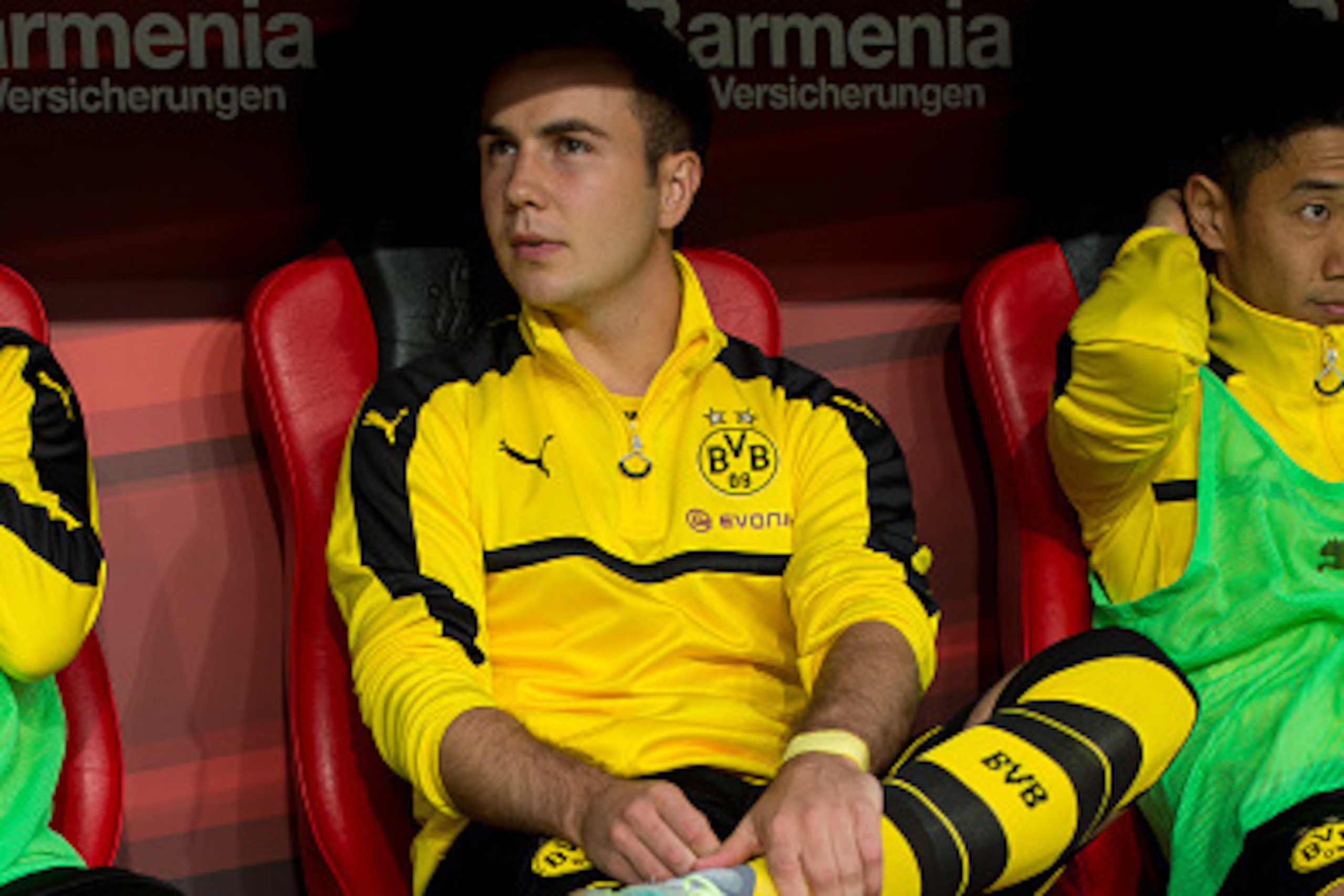
Tuchel and his coaching staff are handling the returnee with caution, giving him all the time he needs to come back into form after three ultimately disappointing years with Bayern Munich. Seeing as his time in Bavaria was littered with nagging injuries, a near constant stop-and-go, it's probably a wise decision.
At some point, though, Dortmund will have to unleash Gotze. The current slew of injuries may well force Tuchel into doing so sooner than he would have hoped.
So far, the 24-year-old has not played the role his quality would dictate, for example, spending more than 100 fewer minutes on the field than fellow summer signing from Bayern Sebastian Rode, per Transfermarkt.
With one goal and no assists from his appearances so far, it would be easy to call his performances underwhelming. Fans who remember the Gotze of his first stint at Dortmund, during the height of the Jurgen Klopp era at the club, may even be disappointed to this point.
It has to be pointed out, however, that he has an entirely different range of duties in Tuchel's BVB.
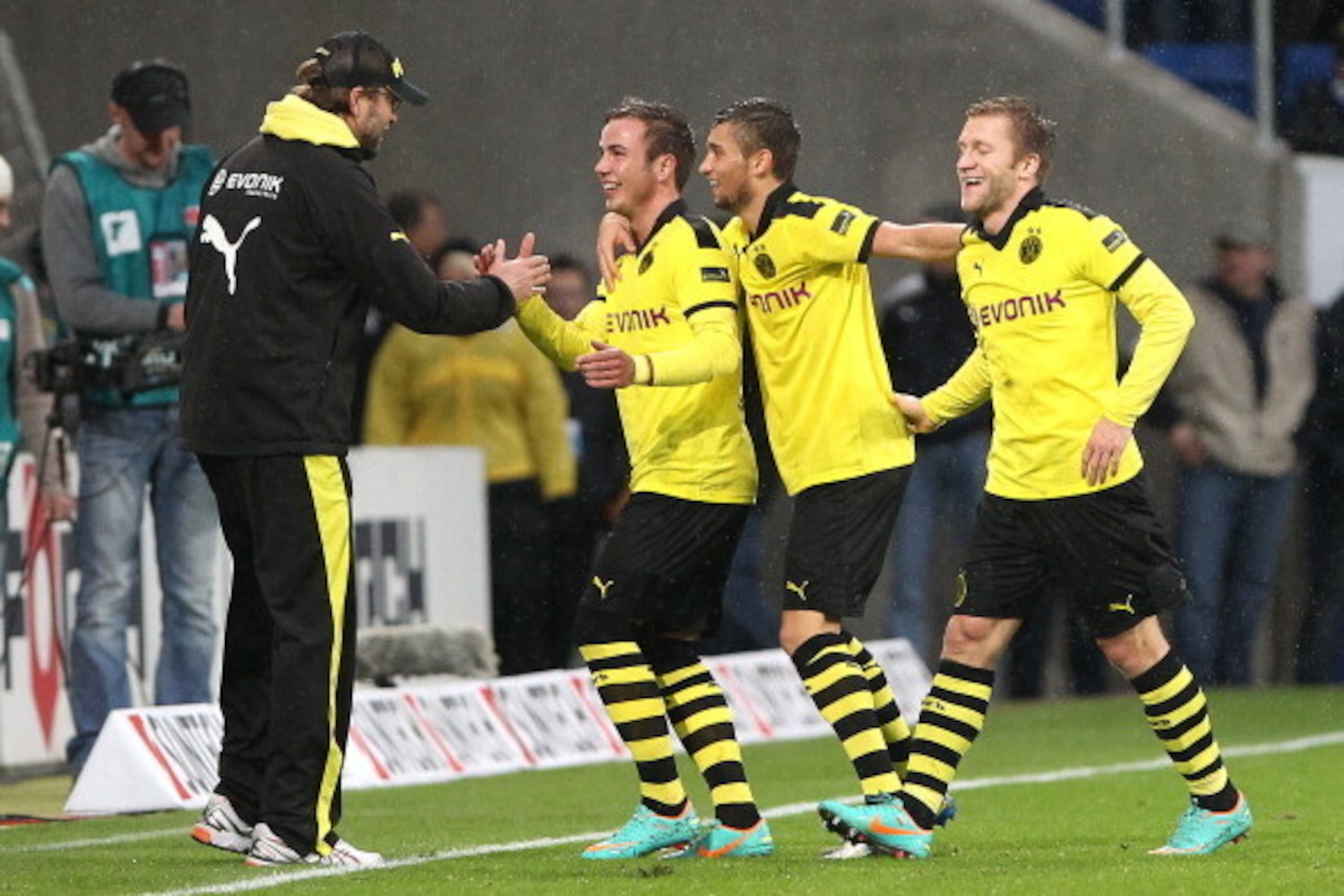
He was a carefree, creative spirit in what Klopp described as "heavy-metal football" in a 2013 press conference: running at opponents, dribbling past them at speed, trying to get shots off—Gotze ran wild with team-mates Reus and Robert Lewandowski.
In Dortmund's more cultured, possession-oriented playing style under Tuchel, he has a less flashy role. Playing next to another central midfielder and ahead of Weigl in a 4-1-4-1, he has more strategic responsibilities.
Whether it's playing the easy pass to keep ball circulation alive, or making a run toward the touchline to allow someone like Ousmane Dembele to push into the middle, Gotze does all the little things that go unnoticed during the thrill of a match.
What fans are witnessing is not a formerly great attacker's attempt to recapture the magic of old days, it is rather the maturation of a footballing prodigy.
Dortmund need the Germany international as a string-puller in midfield more than as a difference-maker in the final third. The Black and Yellows have Pierre-Emerick Aubameyang, Dembele, Schurrle, (eventually) Reus or Emre Mor for highlight moments up front.
Gotze's importance lies in the team's engine room, if you like. Of course, that does not mean he does not have to improve many aspects of his game.
Playing in deeper zones means more of the hard work he has quietly executed, for example, winning possession 3.5 times per game, as German sport magazine Kicker pointed out in their Thursday issue.
But the 24-year-old needs to become more dominant on the ball and seize the reins of the game. In his three appearances in the Bundesliga to this point, he only played an average of 24.7 passes, per WhoScored.com, putting him well behind Rode, Castro and Guerreiro playing in the same or similar positions.
Per Kicker, only strikers Aubameyang and Adrian Ramos average fewer than his 48 touches per 90 minutes.
It is a sign of Gotze's ongoing reacclimatisation at the club. Joining relatively late following Euro 2016 and first having to get into playing shape, the World Cup winner was always going to need time. Crucially, fans seem happy to give him that time.

Negative reactions to his return from Bavaria have surprisingly been few and far between. A few boos and whistles here and there have been drowned out by overwhelming support for Gotze. He may not be loved again just yet, but a vast majority of supporters at least tolerate his presence and appreciate his efforts to win back the hearts he broke three years ago.
In order to do so, the midfielder probably only needs one great game—an explosion with an important goal, impressive assist or the like. The coming weeks should provide plenty of opportunity.
Among Dortmund's seven matches in quick succession are two crucial UEFA Champions League matches against Sporting CP and the Revierderby against local rivals FC Schalke, for example—hugely important fixtures that a player such as Gotze should live for.
Having so far been upstaged by Guerreiro's emergence as an all-action midfielder, or the buzz around youngsters Dembele, Mor and Christian Pulisic, it is now time for Gotze to take centre stage.
The Westfalenstadion is ready to fall at his feet once again.
Lars Pollmann also writes for The Yellow Wall. You can follow him on Twitter.

.jpg?w=2560 "Panthers Saints Football")

.jpg?w=2560 "Consensus Mock Draft 📋")

.jpg?w=2560 "NFL's New Disciplinary Rules")